Green habits through school sports
19/10/26, 07:30
Education authorities and school administrations have a responsibility to give physical education the same seriousness as academic learning. Schools can help develop a generation that values both physical fitness and environmental protection.
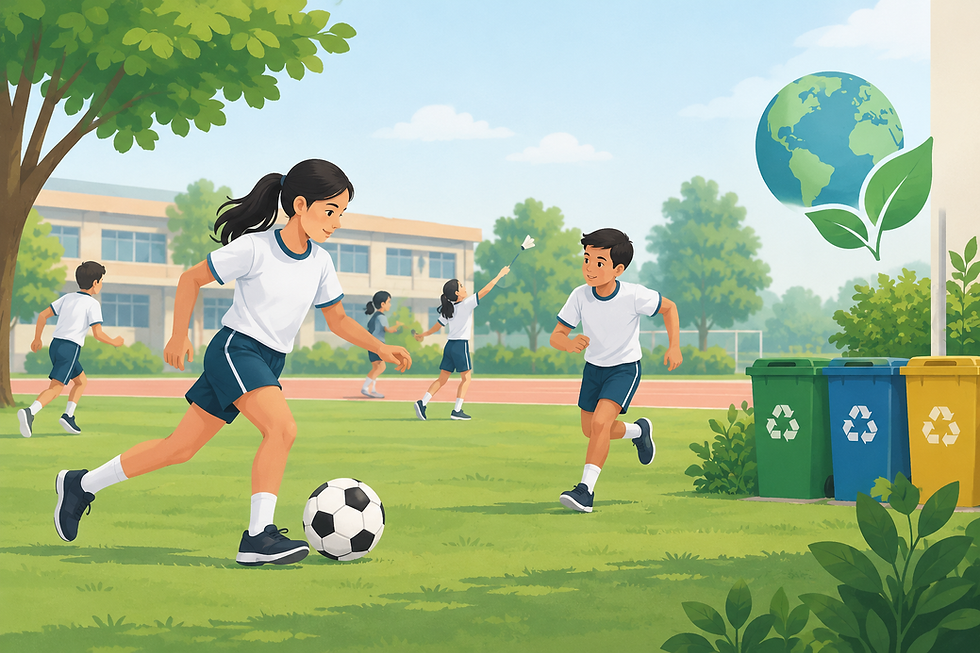
Education is often measured through examination results, grades and academic achievements. School timetables reflect this priority, with mathematics, science and languages receiving most of the attention. Physical education is frequently treated as a break from classroom learning rather than an essential part of it. Environmental education, meanwhile, is often confined to textbooks and classroom discussions. Schools have an opportunity to bring these priorities together by using sports to promote physical fitness, environmental awareness and responsible behaviour.Sports depend on the quality of the environment in which they are played. Clean air, safe playgrounds, adequate water and accessible open spaces are essential for outdoor physical activity. Air pollution can make exercise hazardous, while extreme heat and irregular rainfall can disrupt training and competitions. The loss of green spaces in expanding urban areas also limits opportunities for children to play. Protecting the environment is therefore not separate from promoting sports. It is necessary to ensure that children can remain physically active in safe surroundings.Yet physical education continues to receive less attention than academic subjects in many schools. Games periods are sometimes used to complete unfinished lessons or prepare students for examinations. Shortages of playgrounds, equipment and trained physical education teachers further restrict participation. Environmental concerns rarely feature in decisions about school sports facilities, even though the availability of trees, shade, clean surroundings and well-maintained playing fields directly affects students' experiences.Schools should recognise that sports can help children understand environmental issues through everyday experience. Students who play on open grounds can appreciate the value of green spaces. Outdoor activities can encourage an interest in trees, biodiversity and the natural world. Nature walks, cycling, hiking and orienteering can combine physical activity with learning about local ecosystems. Such experiences can make environmental responsibility more meaningful than lessons based solely on definitions and written assignments.However, this connection requires thoughtful planning. Sporting activities should not damage the environments in which they take place. Schools can organise waste-free sports days, discourage single-use plastics, provide drinking-water refill points and ensure that grounds are cleaned after competitions. Students can be encouraged to separate waste, avoid littering and use resources responsibly. These measures are simple, but their regular practice can help establish habits that extend beyond school.The design and maintenance of sports facilities also deserve attention. Schools should protect existing trees and open spaces rather than treating them as land available for construction. Where possible, playgrounds should include shaded areas and suitable drainage. Water used to maintain grounds should be managed carefully, particularly in areas facing shortages. New facilities should be planned with local weather conditions and environmental constraints in mind. Limited space need not prevent participation, as indoor games, fitness activities and shared community facilities can provide alternatives.The benefits of school sports extend beyond environmental awareness. Regular physical activity supports fitness, coordination and emotional well-being. Team games teach cooperation, discipline and respect, while individual activities develop patience and perseverance. These qualities can also strengthen collective responsibility for shared spaces and resources. Participation should not be restricted to students with exceptional athletic ability. Every child deserves opportunities to exercise, learn new skills and enjoy physical activity, including students with disabilities.Schools must also prepare students for the effects of changing environmental conditions on sports. Heatwaves, poor air quality and severe weather require appropriate safety measures. Outdoor activities should be adjusted when conditions become unsafe, and students should have access to drinking water, shade and suitable medical support. Teachers need clear guidance on when exercise should be modified or postponed. Promoting physical activity must go hand in hand with protecting children's health.Education authorities and school administrations have a responsibility to give physical education the same seriousness as academic learning. This means protecting games periods, appointing trained instructors, maintaining facilities and providing opportunities for a broad range of activities. Environmental considerations should be integrated into the planning and management of these facilities. Progress should be judged not only by sporting achievements but also by the quality of participation and the responsible use of shared spaces.Schools can help develop a generation that values both physical fitness and environmental protection. But this cannot be achieved through occasional sports days or awareness campaigns alone. It requires regular activity, practical learning and institutional support. Sports should be recognised as an essential part of education, while environmental responsibility should shape how sporting opportunities are created and maintained.